
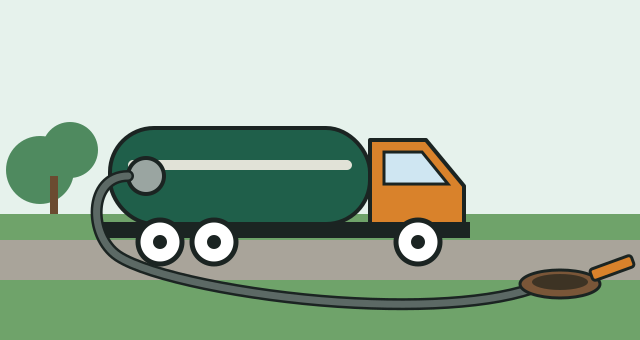
Why pumping matters
Everything that goes down your drains ends up in the septic tank. Heavy solids sink and form sludge; grease and lighter material float and form scum. Only the liquid in the middle should flow on to the leach field. If the tank gets too full, solids can be pushed into the leach field and clog the soil — and the leach field is the most expensive part of the system to replace.
How often to pump
Massachusetts Title 5 rules say pumping is typically needed at least once every three years, depending on use. The rules also require pumping whenever sludge or scum builds up past set limits. You may need to pump more often if:
- You have a large household
- You use a garbage disposal — Title 5 recommends pumping every year
- Your tank is small for the household
- You have a pump chamber or an alternative treatment system with its own maintenance requirements
Keep your receipts. A Title 5 inspection report up to three years old can be used for a sale if the system was pumped at least once a year and you have the records.
What a pump-out usually involves
- Find the cover. The crew locates the tank access, digging if it's buried. Risers that bring covers to the surface make future visits easier.
- Pump the tank. Sludge and scum are removed through a vacuum hose.
- Visual check. Many crews look at the baffles and the inlet and outlet, and clean the effluent filter if there is one. Ask what's included.
- Records. Keep the receipt for your records and any future Title 5 inspection.
Keep your system healthy between pump-outs
Tips based on EPA's SepticSmart guidance:
- Only flush toilet paper — wipes (even "flushable" ones), paper towels and hygiene products belong in the trash.
- Keep fats, oils and grease out of the sink.
- Use water efficiently and spread out laundry loads instead of doing them all in one day.
- Protect the leach field: don't park or drive on it.
- Fix running toilets and leaky faucets — extra water strains the system.
Septic pumping questions
How do I know if my septic tank needs pumping?
Common signs include slow drains on the lowest floor, gurgling pipes, sewage odors near the tank, and wet or extra-green grass over the leach field. Title 5 rules say pumping is typically needed at least once every three years, so if it's been longer than that, it is likely due.
Can I use additives instead of pumping?
Additives don't replace pumping. Solids still build up in the tank and need to be removed. Regular pumping and keeping grease, wipes and harsh chemicals out of your drains are the reliable approach.
Do I need to be home for pumping?
Ask the provider. Many only need access to the tank cover and to know where it is. If the cover is buried, they may need to dig to find it.