
What is a Title 5 inspection?
Title 5 is the part of the Massachusetts State Environmental Code that governs private septic systems. Among other things, it requires the septic system to be inspected when a home is sold or ownership is transferred, so failing systems are identified and upgraded.
That matters in Swansea. The town does not have a town-wide public sewer system, so many homes — from Ocean Grove to North Swansea — rely on private septic systems. The Lees, Cole and Kickemuit rivers all flow into Mount Hope Bay, so working septic systems matter for local water quality.
When you need one
- Selling or transferring a home on a septic system — within two years before the transfer.
- Increasing design flow or changing use — for example, adding bedrooms or converting a building — when a building or occupancy permit is needed.
- Dividing or combining properties served by septic systems.
- When ordered by the Board of Health, MassDEP or a court.
Some transfers are exempt — for example, residential transfers between spouses, between parents and children, or between full siblings. Refinancing a mortgage is not treated as a transfer. If you're unsure whether your situation qualifies, ask your attorney or the Swansea Board of Health before you schedule.
What the inspector checks
- Records. Past permits, plans and pumping history, often from the Board of Health file.
- Locating and uncovering. Finding and opening the tank covers and the distribution box.
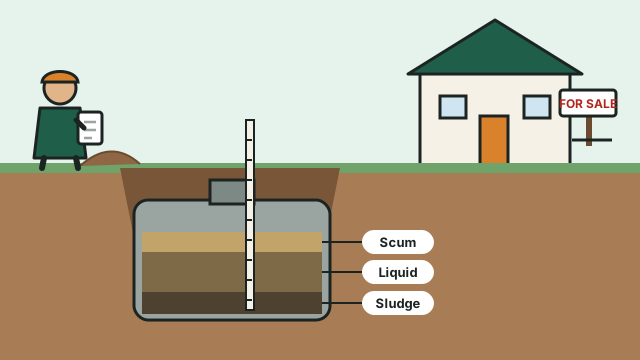
- Tank condition. Measuring sludge and scum, and checking baffles, inlet and outlet pipes, and the tank itself.
- Distribution box and leach field. Checking that effluent flows evenly and looking for breakout, ponding or backup.
- Groundwater and setbacks. Where the form requires it, checking the system's position relative to high groundwater, wells and wetlands.
- Report. The inspector completes the official state Title 5 form and submits it to the Board of Health within 30 days.
How long the inspection takes depends on the system and how easy it is to uncover. Pumping is not required for a standard septic tank during the inspection (it is for cesspools and holding tanks), though some owners pump at the same visit.
Possible results
The official form has four outcomes: the system passes, conditionally passes (a specific component, like a broken baffle or a pump, must be fixed), needs further evaluation by the Board of Health, or fails. In most instances, a failed system must be repaired or upgraded within two years. See septic repair and replacement for what that involves and Title 5 costs for typical pricing.
Tip for sellers: Arrange the inspection soon after the house is listed. If something needs fixing, you'll have time to get quotes and permits instead of scrambling before closing.
Getting ready for the inspection
- Gather your records: the system plan and recent pumping receipts. The Board of Health office can often help locate plans.
- Let the inspector know where the tank and distribution box are, if you know.
- Make sure the inspector can reach the tank and distribution box with equipment.
Title 5 inspection questions
Who pays for the Title 5 inspection, the buyer or the seller?
Title 5 does not say who pays for inspections, repairs or upgrades. The buyer, seller and lender work it out, usually in the purchase agreement. Because the inspection is generally needed before the sale, sellers often arrange it.
How long is a Title 5 inspection good for?
An inspection must be done within two years before the transfer. A report up to three years old can be used if the system was pumped at least once a year during that time and you have the pumping records.
Can the inspection happen in winter?
Usually, yes. If weather conditions prevent an inspection, Title 5 allows it to be completed within six months after the transfer, provided the seller gives the buyer written notice of the Title 5 requirements.
Does a home inspection include Title 5?
No. A Title 5 inspection must be performed by a System Inspector approved by MassDEP, using the official state inspection form. A standard home inspector can't do it unless they also hold that approval.